
Hardware Reliability Engineering
Component derating, MTBF analysis, AEC-Q qualification screening, thermal simulation, and supply chain resilience — applied to every product DSPWorks ships.
Explore the ArchitectureArchitecture
Reliability is not a phase; it is a structural property of the design that has to be built in from the schematic. Our reliability architecture starts with a per-component derating table — voltage, current, junction temperature, dV/dt, dI/dt — that every active part must clear before it lands in a layout. Capacitors and connectors are picked against an ambient envelope that includes the worst Indian summer rooftop installation, not the bench at 25 °C.
A formal Failure Modes, Effects, and Criticality Analysis (FMECA) accompanies the schematic, walking each component fault to its system effect and assigning a severity. High-severity outcomes feed back into the design — added redundancy, clamping, watchdog coverage — until the residual risk is acceptable.
Thermal architecture is simulated in a finite-element tool (Ansys Icepak or equivalent) before the PCB is laid out, with the simulation re-run against measured junction temperatures from a bench prototype to close the loop.
Engineering Approach
Accelerated life testing is run against a representative cohort of every shipped SKU. We use HALT (Highly Accelerated Life Test) early in development to find weak components, and HASS (Highly Accelerated Stress Screen) in production on the SKUs that warrant it. Results feed a continuously-updated MTBF estimate that we publish to the customer.
Supply chain resilience is engineered by treating second-source qualification as a deliverable, not a wish. Every critical part has a qualified alternate from a second manufacturer, with a documented swap path that does not require a re-spin of the PCB. We have invoked that swap path more than once during silicon shortages, and shipped through them with no field-rate change.
Burn-in is applied selectively — critical parts and safety-relevant SKUs run 168 hours at elevated temperature before the unit is sealed for shipment.
Standards & Compliance
Component qualification follows AEC-Q100 for ICs, AEC-Q101 for discretes, and AEC-Q200 for passives where the application demands automotive-grade screening. Environmental qualification follows the IEC 60068-2 family for thermal cycling, vibration, mechanical shock, and humidity.
Workmanship and assembly inspection is to IPC-A-610 Class 2 / 3 depending on the product, with the manufacturing site under ISO 9001:2015 quality system audit. Rework, repair, and traceability practices follow IPC-7711 / 7721.
Where this capability ships in the world.
Real products that exercise the hardware reliability engineering stack — click through for the full case study.
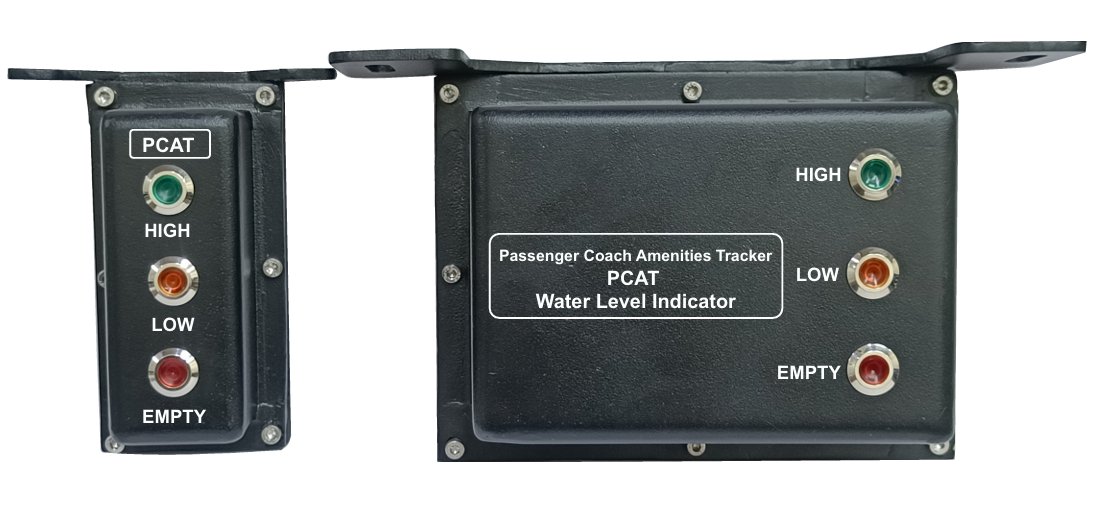
IoT Water Level Indicator System
Compliant with IS/RDSO-CG/0002:2025. A complete IoT-based real-time water level monitoring solution for Indian Railway passenger coaches.
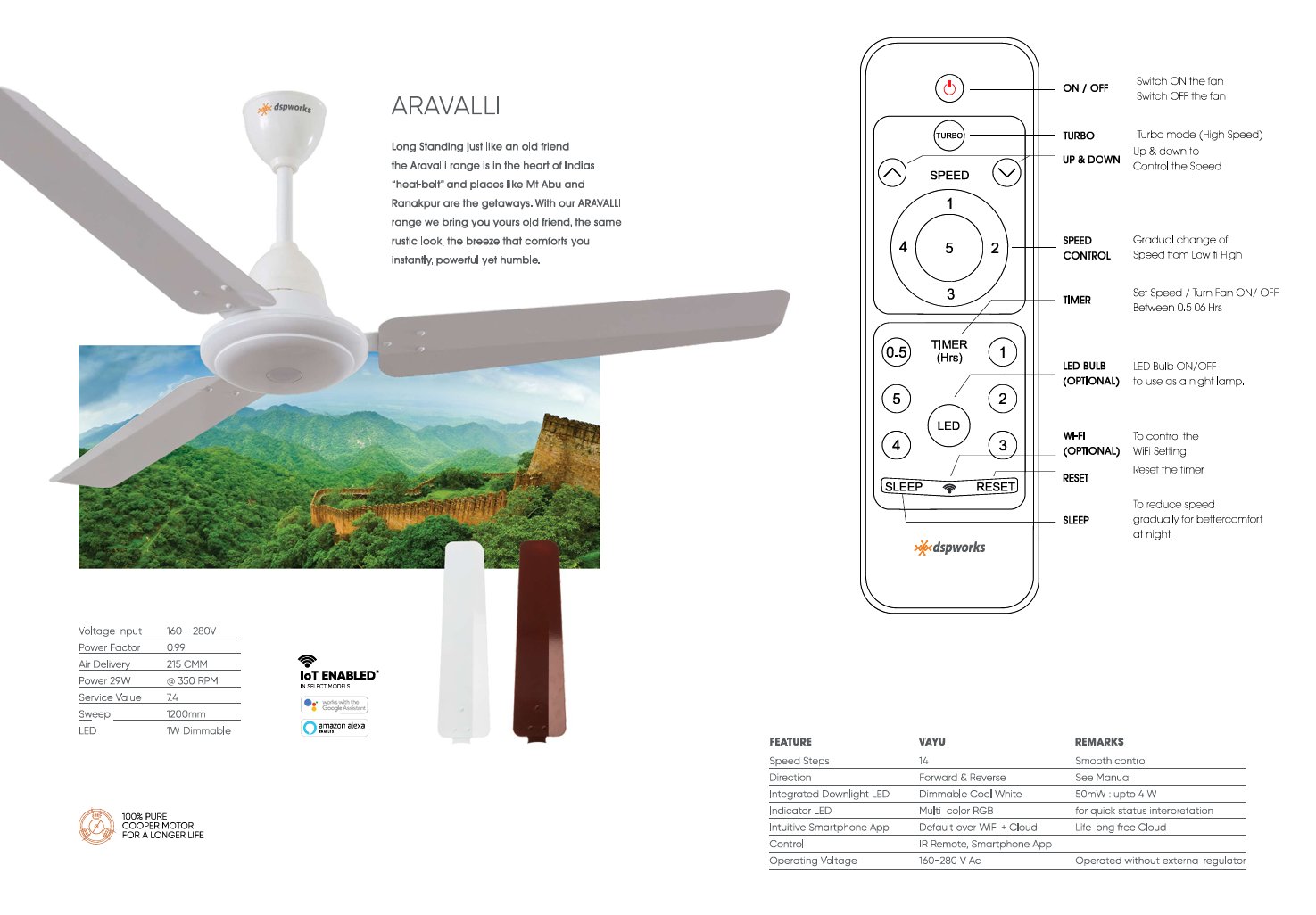
Vāyu — Desh Ki Hawa · BLDC Ceiling Fan
DSPWorks' own consumer brand — a 28W BLDC ceiling fan with 65% energy savings over conventional fans.
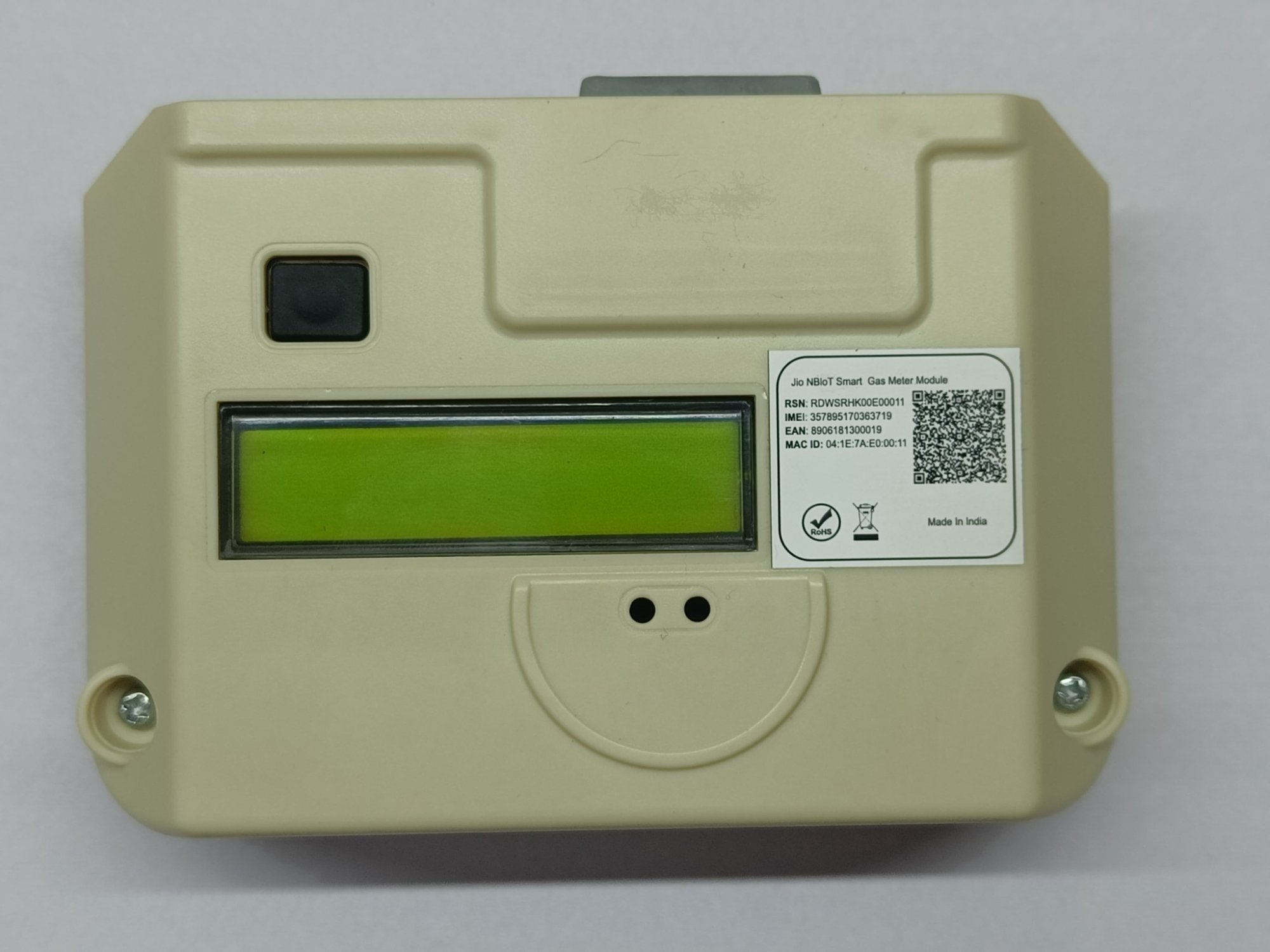
Gas AMR Module
A retrofit automated meter reading module for standard diaphragm gas meters — no meter replacement required.
Other engineering disciplines at DSPWorks.
Railway Signalling Engineering
Trackside and control-room systems for signalling, interlocking, and train protection. Designed to RDSO and CENELEC standards for Indian Railways and metro networks.
Wireless Systems
Multi-protocol wireless hardware design across LoRa, BLE-LR, IEEE 802.15.4g sub-GHz, Wi-Fi, Thread, Matter, and 4G/LTE — tuned for range, power, and data.
Location & Tracking Systems
GNSS-based tracking hardware with indoor fallback via Wi-Fi SSID positioning and BLE-LR. From 12×12 mm embeddable modules to M2M-connected field trackers.
Home Automation Systems
End-to-end home automation — device hardware, firmware, cloud backend and mobile app. 802.15.4g sub-GHz mesh, Wi-Fi, and Matter / Thread — supplied as OEM platforms.
Ready to transform your complex challenges into competitive advantages?
Partner with DSPWorks for end-to-end product realization that combines technical mastery with global scale.