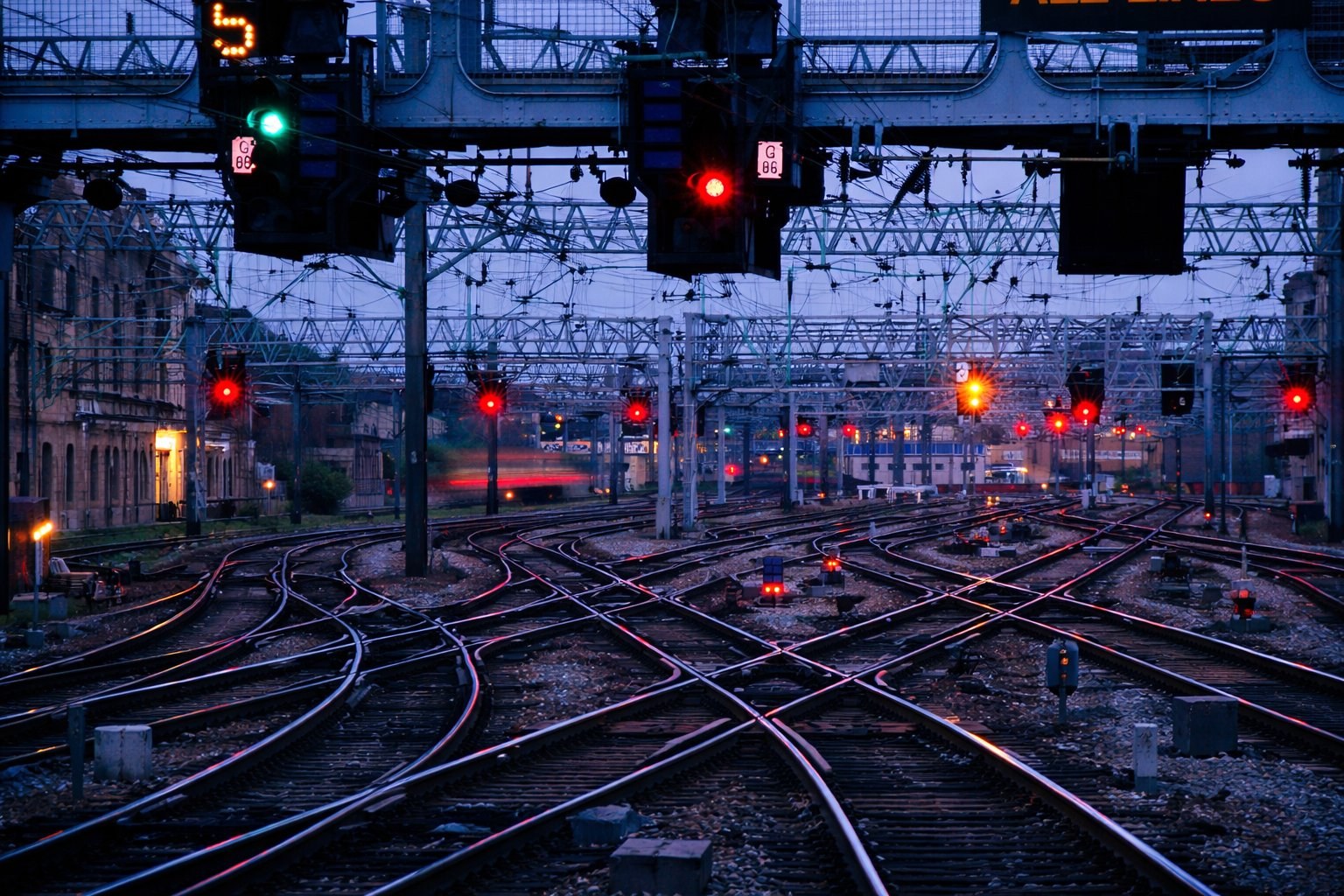
Railway Signalling Engineering
Trackside and control-room systems for signalling, interlocking, and train protection — engineered to SIL-4 under IEC 62279, EN 50128, and EN 50129.
Explore the ArchitectureArchitecture
Our signalling architecture partitions every system along the safety boundary first. A vital subsystem holds the interlocking logic on a redundant processor pair that votes every output. A non-vital subsystem handles indication, telemetry, and human-machine interface on conventional hardware. The two communicate across a galvanically-isolated boundary with cryptographic message integrity, so a failure in the indication path cannot ever reach into the interlocking.
Trackside object controllers are designed for IP67 outdoor service and powered by a redundant 24 V supply with brown-out detection. They speak to the radio block centre over a sealed protocol with sequence numbers and replay protection — the same wire-level conservatism that EN 50159 demands for category-3 transmissions.
The control-room side is built on rack-mounted hardware with diagnostic visibility down to the individual relay. Maintenance staff see the same model the safety case was written against — there is no translation layer that could drift.
Engineering Approach
Safety, hardware, and software are developed in lockstep from day one. The safety case is not a deliverable produced at the end; it is the spirit and action which drives every design decision, every test plan, and every code review. Our software is written under MISRA-C with formal model checking on the vital paths, and every change is traced back to a hazard, an assumption, or a derived requirement.
Hardware reviews include a fault-tree analysis at the schematic level, with derating documented for every active component against the worst-case operating envelope of the Indian rail network. Components are selected for an industrial temperature range and a 15-year supply commitment and a traceability down to the last washer as well as certifications for every component.
Independent assessment is built into the schedule. We work with notified bodies from the kick-off, not as a late-stage reviewer, so non-conformities are caught when fixing them is cheap.
Standards & Compliance
Every deliverable is traceable to IEC 62279 / EN 50128 for software and EN 50129 for system safety, with EN 50128 / EN 50159 governing the communication boundary. Indian-specific compliance covers RDSO approvals and the IS/RDSO-CG/0002:2025 specification family for connected railway products.
EMC and environmental compliance follow EN 50121-3-2 (rolling stock) and IEC 61373 Category-1 Body shock and vibration. Audit packages are prepared to the depth required for both Indian and CENELEC notified-body review, with a clear chain from hazard to evidence.
Where this capability ships in the world.
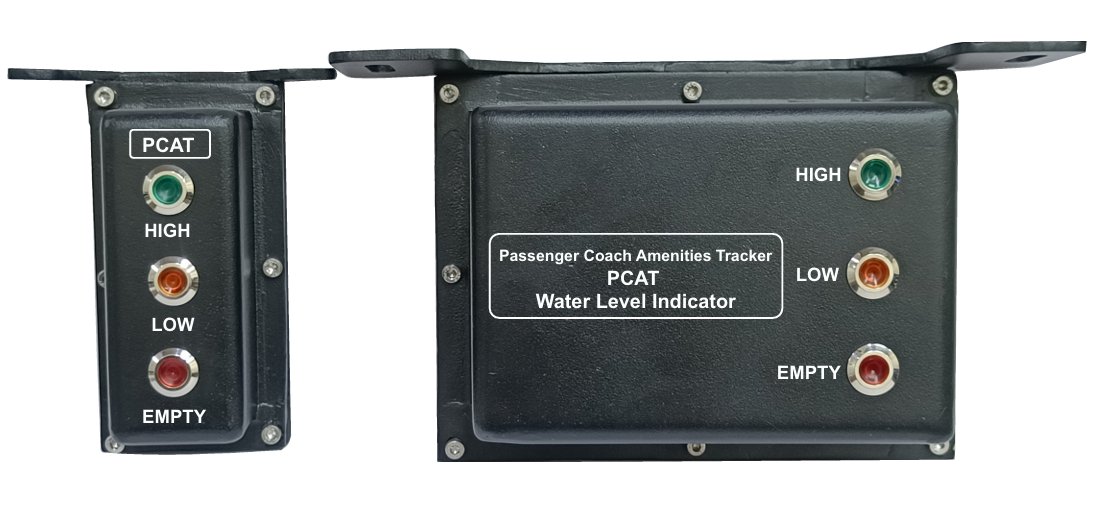
Real products that exercise the railway signalling engineering stack — click through for the full case study.
Other engineering disciplines at DSPWorks.
Wireless Systems
Multi-protocol wireless hardware design across LoRa, BLE-LR, IEEE 802.15.4g sub-GHz, Wi-Fi, Thread, Matter, and 4G/LTE — tuned for range, power, and data.
Location & Tracking Systems
GNSS-based tracking hardware with indoor fallback via Wi-Fi SSID positioning and BLE-LR. From 12×12 mm embeddable modules to M2M-connected field trackers.
Home Automation Systems
End-to-end home automation — device hardware, firmware, cloud backend and mobile app. 802.15.4g sub-GHz mesh, Wi-Fi, and Matter / Thread — supplied as OEM platforms.
Industrial, Agricultural & Utility IoT
Monitoring and control for pump sets, three-phase power, industrial switching, and utility metering (including retrofit gas AMR) over 4G, NB-IoT, or LoRa.
Ready to transform your complex challenges into competitive advantages?
Partner with DSPWorks for end-to-end product realization that combines technical mastery with global scale.